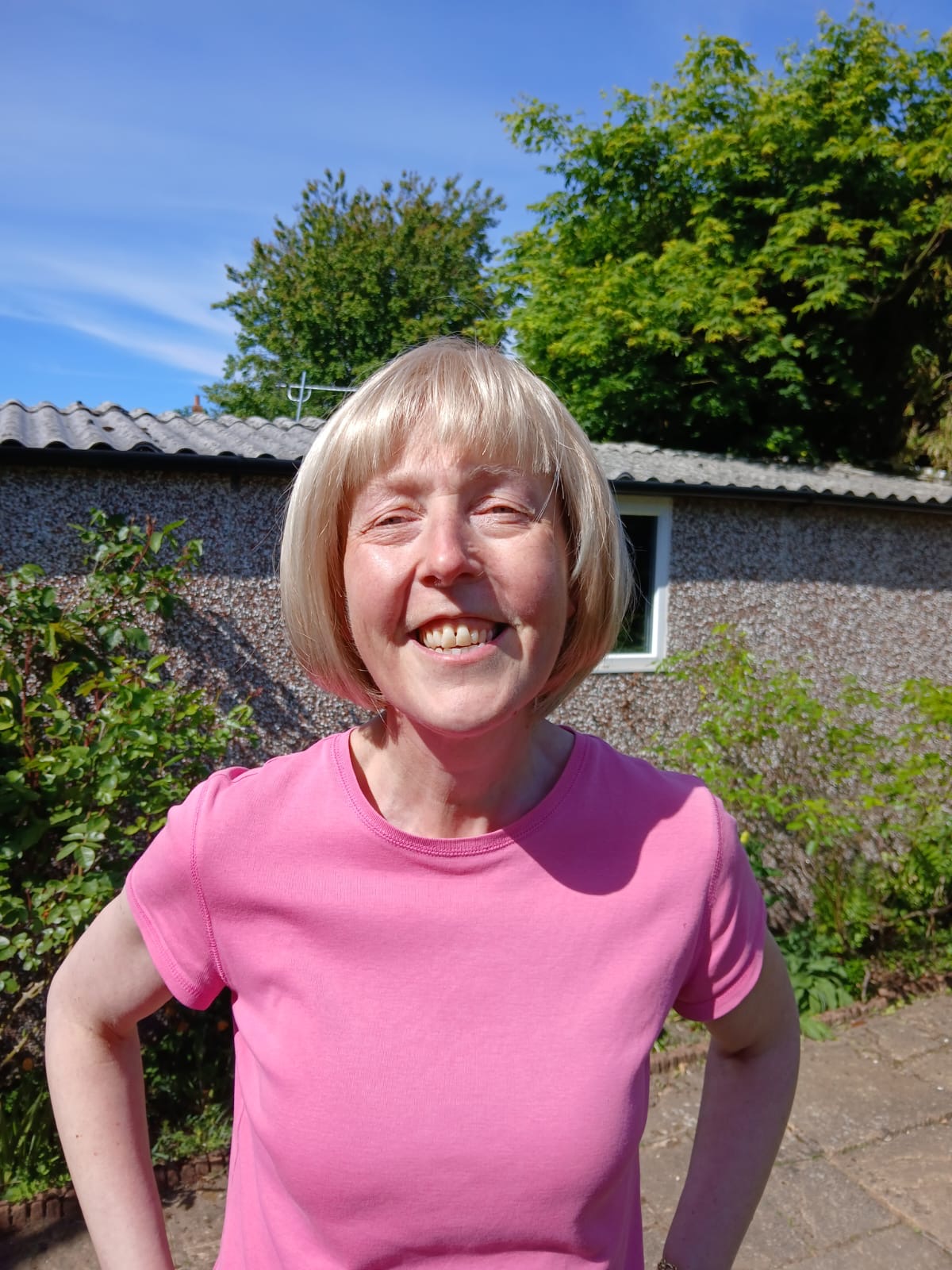
Case study: funding for a wig after chemotherapy
We meet 50-year-old Tracy from Freckleton, Lancashire, who was diagnosed with lymphoma in 2024. In this interview, she shares her candid experience of cancer treatment – the emotional highs and lows, the challenges of losing her hair during chemotherapy, and the confidence she found after receiving funding for a wig from The Orange Foundation.
Can you tell us a bit about your cancer diagnosis?
I didn’t have any of what is classed as ‘traditional’ cancer symptoms. I experienced a seizure in the middle of August 2024, completely out of the blue. I went through so many tests, because the doctors were unsure what caused it.
They discovered lumps in my skull, and they biopsied them, taking a couple of them out. The results came back that they were cancerous, specifically lymphoma. I knew the terminology of lymphoma, but I didn’t really understand what it was and what it meant for me. I was referred to Blackpool Victoria Hospital, because they’re the lymphoma specialists in my area.
I met the team, and they confirmed my lymphoma diagnosis. I was told that I needed chemotherapy, and a week later, I was having my first dose, so it was fairly quick.
I was an in-patient at first, because the doctors weren’t sure how my body would react to chemo. If I had reacted adversely, I would have needed to be in the ward where they could look after me. I was on a three-week cycle: two weeks of chemo, one week to recover—then it started all over again, right through to the end of January 2025. It felt endless. I’d go from feeling a bit unwell, to really poorly, then just start to recover, only to be knocked back again. I never got the chance to fully bounce back before the next round hit. It was one hell of a treadmill.
There wasn’t really time to take in my diagnosis; you know, the enormity of it all.
Because of the chemotherapy treatment, my blood levels really dropped. I think, through the chemo process, I had 10, maybe 11, blood transfusions, along with a couple of doses of platelets as well
I had blood tests every day and a few bad reactions during treatment, which meant antibiotics, antivirals, and more tests to check if I was recovering. I caught a cold on the ward in October that took ten weeks to shift. Then, just as I was about to finish treatment, they told me I had the flu, with no symptoms, but still serious after chemo. So I was given a high dose of meds. I wasn’t too poorly, thankfully, but I did pass it on to my husband – he got it worse, though his immune system could handle it.
How did your diagnosis and treatment affect you both physically and emotionally?
There was no opportunity to really process any of it, because I was on this treadmill of testing and treatment, testing and treatment, feeling poorly, so only when the treatment stopped, and I started to feel physically better, could my brain reflect on what I’ve just been through. I’m only now at the starting point to try to process the whole trauma of it all.
This year is one of your big birthdays, isn’t it?
Yes! I was meant to be in New Zealand for four weeks, celebrating my 50th birthday, but obviously, we couldn’t travel because I wasn’t well enough. I’m still under the consultant, so right now, it’s all a big no-no. And because of the biopsies I had in August, I’ve got a piece of skull missing with titanium mesh replacing it. We still don’t know how my head will feel when I fly, considering the pressure and everything. I think that’s a question for a couple of years’ time.
When did you first start experiencing hair loss after your treatment started, and how did that impact you?
I’d had chemo treatment and been allowed home, but I was bounced back into hospital after becoming really poorly, which was my first adverse reaction. Physically, I wasn’t feeling well.
I woke up one morning to find hair all over the pillow. I burst into tears. I knew hair loss was likely to occur, and I’d told myself that when it started, rather than have hair shed everywhere, I was going to shave it all off. But when it started coming out, I really didn’t feel well enough – mentally or physically – to deal with it
So rather than shave it off, I just ignored it. But every morning, my pillow was covered in loose hair. Every time I went to the bathroom, I saw myself in the mirror, and there was a big patch missing. It was absolutely soul-destroying
A friend helped me put things into perspective when I was feeling really upset – they pointed out that I was grieving the way I used to look. A few months ago, I never imagined this would be part of my life, and now I’m losing a part of my identity because my hair loss is so visible. Everyone can see my head, and I have no control over it. I didn’t choose this illness, and while I want the treatment to work, it’s not like I asked for this to happen. It’s completely out of my hands, and that loss of control was devastating. I knew hair loss was a possibility; I’d seen the brochures and photos. But nothing prepared me for how much it would affect me emotionally.
Seeing bald women out and about isn’t common, and it made me feel exposed in a way I wasn’t ready for. Maybe I hadn’t even fully processed the diagnosis yet, and this just added to the weight of it all. As soon as people see you, they know something’s wrong – it’s written all over you.
It’s not like I’m going around telling people I have cancer; people just take one look at my head and know, whether I want them to or not. That visibility was really hard to deal with. Every time I caught a glimpse of myself in the mirror, it hit me all over again: this is what I look like now, and it’s not a look I ever wanted. It was painful, and while I wouldn’t say I ever truly accepted it, I eventually got used to it – sort of. Even knowing it’s temporary and my hair will grow back didn’t make it easier. Nothing really prepares you for how deeply it affects you. It was a massive thing.
How did you first learn about The Orange Foundation and its support for people living with cancer?
I hadn’t heard of the charity until a really good friend signposted me to them. I’d mentioned my hair loss, and how the NHS offers funding towards a wig, but the wigs are still expensive. My friend said that The Orange Foundation can support people with cosmetic treatments, like wigs, after chemotherapy. I contacted them, and they responded quickly, offering to provide funding towards wigs for me, which was great and unexpected.
Unfortunately, the cranial biopsy left a large scar and pain, and then I started chemotherapy, so it took a long time to heal, and I couldn’t bear anything touching that side of my head. I couldn’t even lie on that side or have a pillow touching it, so although I’d have liked a wig as soon as the hair started coming out, it was a good five or six months later that my head had recovered enough to get one.
What was it like choosing your wig, and how did it make you feel when you first wore it?
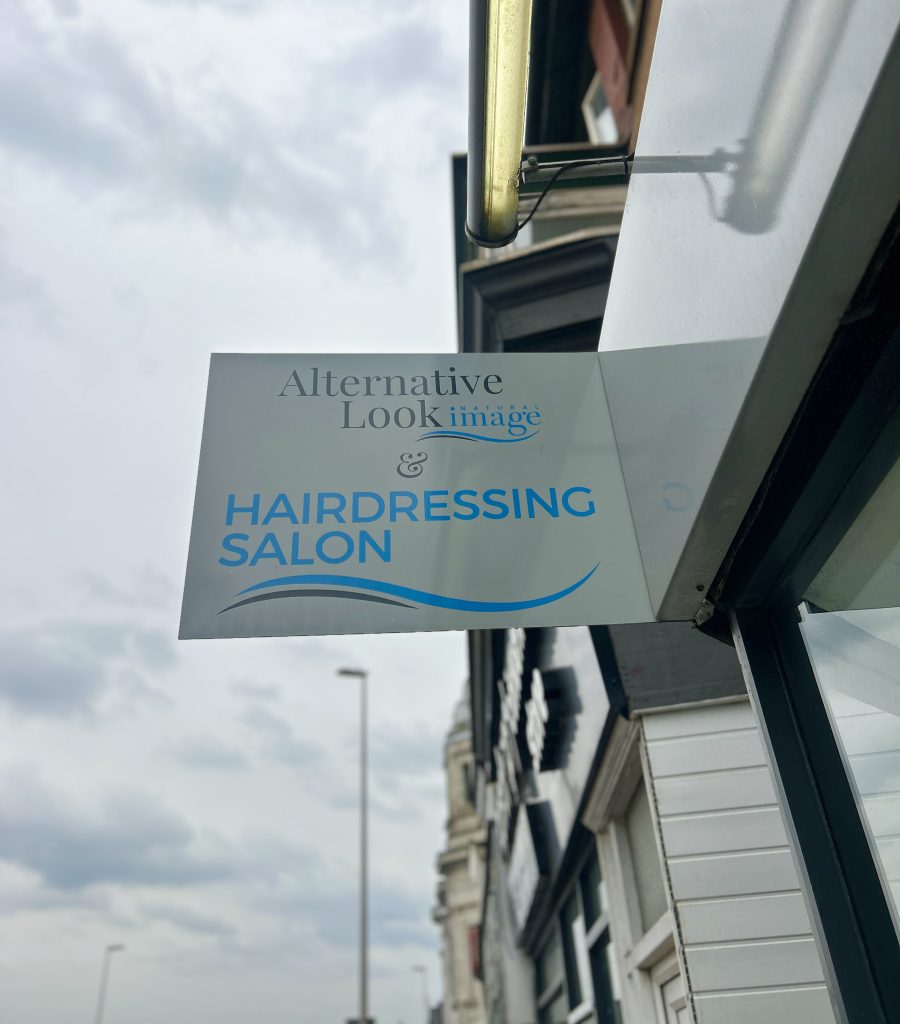
There’s a wig shop in Blackpool that the NHS recommends, and a lady who I’d been in hospital with on one of my stays had bought herself a wig at this shop. The photos of her new hair looked amazing and so natural, not at all ‘wig-like’.
When I was considering what style I’d like, although I don’t have hair and could go with any style or colour, I wasn’t ready for another change. I wanted something similar to my own hair before it fell out.
I thought choosing a wig would be really emotional, but when I got to the shop, it wasn’t. In fact, it was hard to choose because I’d gotten so used to seeing myself without hair that seeing myself with hair again felt strange – every wig looked amazing, but unfamiliar. The shop was great, though; they helped me try on six or seven styles based on the colour and cut I’d described.
I was really glad I’d taken people with me, to help me decide which styles looked good on me. It was difficult choosing! They didn’t have the right size wig at first, so I tried on one that looked okay but didn’t fit properly. A couple of weeks later, I went back after they’d ordered the correct size, and we narrowed it down from there.
What difference has a wig made for your day-to-day life?
Picking up the new wigs was actually quite exciting! It felt good knowing I’d be able to walk down the high street and not look out of place. I’ve just got hair like everybody.
I didn’t want to upset my young nieces and nephews when I visited them, so I chose a wig that looked like my real hair. Hopefully, they’ll see me just as they always have.
I’m really grateful for the support from The Orange Foundation, who have been absolutely lovely throughout. During my chemo journey, when doctors thought I’d had another stroke, I reached out to the team, and they were so responsive and kind.
Tracy received funding for a wig from The Orange Foundation. Learn more about how we support individuals living with cancer here.
You can make a difference.
Every single penny you donate is helping us to
support people living with cancer.





Share with us
